

You walk into a coffee shop you’ve never been to before. The colours feel right. The logo is simple. The staff smile like they already know you. Before you’ve even found a seat, you’re glad you came in.
That’s branding. And nobody stumbled into it.
Here’s what most small business owners find out too late. You can have a genuinely great product and still watch customers choose a competitor who simply looks more trustworthy. People decide fast, usually before they’ve read a single word on your website. If something feels off, they’re gone.
That’s why building a real, consistent brand identity matters more than most people realise.
In this guide, we’ll walk you through the whole process, from knowing your audience to creating something that actually lasts. And if you’d rather have the experts handle it, have a look at our branding and logo design service.
Let’s get into it.
What Is a Brand? Definition, Importance, and Real Examples
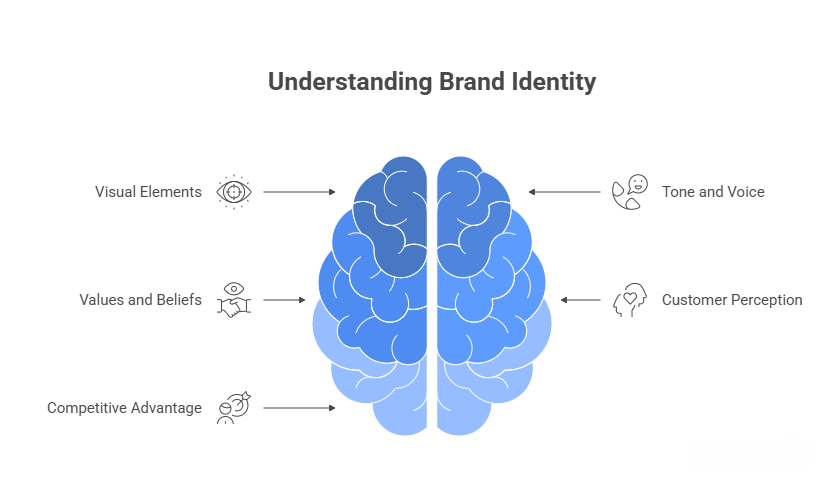 Most people hear “brand” and think logo. Maybe a colour scheme. But a brand is far bigger than anything visual.
Your brand is the full picture of how people see your business. It’s the feeling someone gets when they land on your website. It’s the tone of your emails, the look of your packaging, and the values that drive your decisions. All of it together, that’s your brand.
Branding expert Marty Neumeier put it well: “A brand is not what you say it is. It’s what they say it is.” Your brand lives in your customers’ minds, not in your design files.
Think about Innocent Drinks. Their products are simple enough: juices and smoothies. But the way they communicate is something else. Playful, funny, genuinely warm. They feel like a mate rather than a faceless company. That personality is their brand, and it’s built them a loyal following most businesses would dream of having.
Or look at Apple—minimal, confident, premium. Every product, every store, every advert feels like it came from the same place. That consistency built one of the most recognised brands on earth.
For a small business, your brand is the reason someone chooses you over the competitor charging less down the road. A product is what you sell. A brand is why people buy it.
Why Branding Matters for Small Businesses in 2026
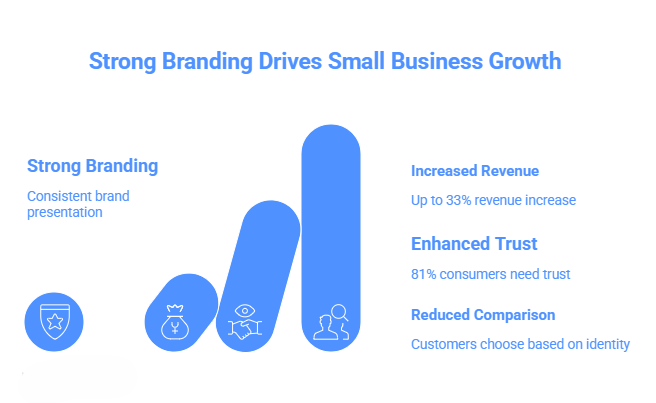 Here’s a number worth writing down. Research by Lucidpress found that consistent brand presentation across platforms can increase revenue by up to 33%. Not 3%. Thirty-three.
That’s not a big-company number. That’s a number that can transform a small business in two years.
But revenue isn’t the only reason branding matters. It’s about trust, and trust, right now, is everything. Research consistently shows that 81% of consumers need to trust a brand before they’ll even consider making a purchase. Not after a sale. Before it. If your brand doesn’t feel credible on first contact, many potential customers won’t stick around.
There’s also a quieter problem branding solves: being forgettable. When your business looks and sounds like everyone else, price becomes the only thing separating you. That’s a race to the bottom that nobody wins.
A strong brand means customers stop comparing you on price and start choosing you because of who you are. That shift, from competing on cost to competing on identity, is where real, lasting growth begins.
How to Build a Brand (Step-by-Step Guide)
Building a brand doesn’t have to feel overwhelming. Break it into the right steps, and it’s far more manageable than it looks.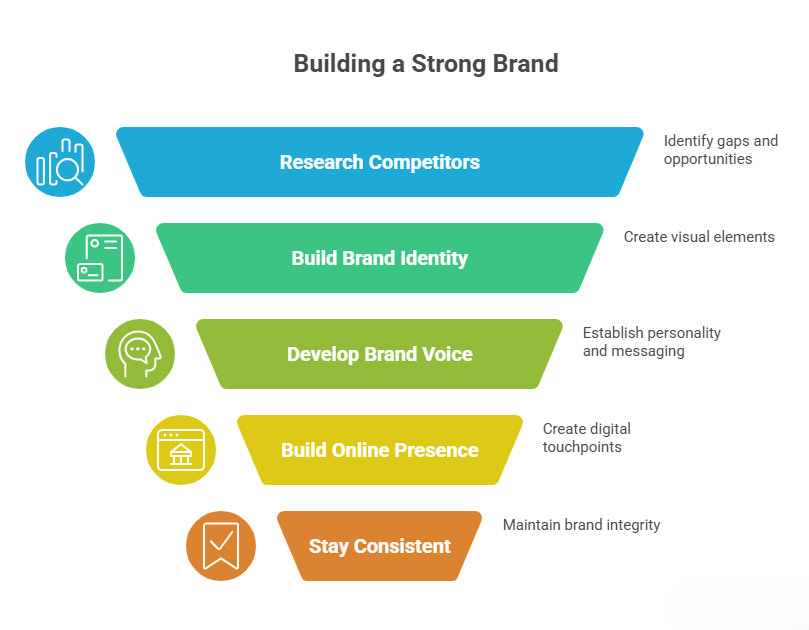
Step 1: Start With Your Target Audience
Before you design a single thing, get clear on who you’re designing it for.
Your audience shapes every decision you’ll make, the language you use, the colours you pick, and the platforms you show up on. Get this wrong, and even the most beautiful brand will fall flat.
So who exactly are you trying to reach? Push past the obvious stuff like age and location. What do they worry about? What do they want more of in their life? What makes them choose one business over another?
Try creating a short customer profile. Give this person a name, a job, a daily routine. Building a brand from scratch is a lot easier when you know exactly who you’re talking to and what they actually need to hear. The clearer your picture of them, the sharper everything else will be.
Step 2: Research Your Competitors
Once you know your audience, take a serious look at who else is competing for their attention.
This isn’t about copying anyone. It’s about spotting the gaps, the things competitors are getting wrong, the customers they’re not quite reaching, the voice nobody in your market is using yet.
Pick five competitors. Read their websites. Scroll through their social media. Go through their Google reviews, good and bad. What keeps coming up? What are people praising and what keeps frustrating them?
If every business in your space sounds corporate and cold, that’s an opportunity. Show up with warmth and personality, and you’ll stand out straight away. Competitor research helps you find your own lane rather than fighting for space in someone else’s.
Step 3: Build Your Brand Identity
This is the part most people jump to first, and where many mistakes happen.
Your brand identity encompasses your logo, colour palette, fonts, and the overall visual feel of your business. Each element carries meaning, often more than you’d expect.
Colour alone does a lot of work. Blue signals trust, think Barclays, PayPal, HSBC. Green suggests health and nature, which is why The Body Shop and Whole Foods both lean into it. Red creates energy and urgency, which is why Virgin and Coca-Cola both use it so effectively.
Your logo needs to work at any size, from a website header down to a tiny app icon. Your fonts should match the personality you’re building. A serif font feels traditional and solid. A sans-serif feels modern and clean. Everything should feel like it belongs together.
Not sure where to start? A professional branding and logo design team will save you real time and make sure it all works from day one.
Step 4: Develop Your Brand Voice and Messaging
Your brand voice is the personality behind every word you put out, on your website, your social posts, your packaging, and even your email subject lines. It’s how you sound, and it matters more than most people realise.
Start by picking three to five words that describe how you want to come across. Friendly and relaxed? Sharp and authoritative? Warm and personal? Then build your language around that.
Your core messaging should include three things: a mission statement (why your business exists), a value proposition (what makes you different), and a brand story (how you started and why it matters).
On that last one, don’t underestimate it. Research shows that 73% of consumers prefer brands that communicate through stories rather than direct advertising. People connect with honesty and real experience far more than polished sales language. Share your journey, including the messy parts, and you’ll earn trust much faster.
Step 5: Build Your Online Presence
Your online presence is your brand’s shop window. If someone searches for your business and finds nothing, or finds something that looks out of date, trust is gone before you’ve had a chance to earn it.
Start with a professional website that clearly explains who you are, what you offer, and how to contact you. Make sure it works well on mobile, since most people browse on their phones.
Then choose your social media platforms carefully. You don’t need to be everywhere, just where your audience actually spends time. A focused social media marketing strategy will do far more for your brand than spreading yourself thin across ten different channels.
Post regularly, respond to comments, and always stay true to your brand voice. And don’t overlook SEO, as optimising your content for search means new customers can find you without spending a penny on ads.
Step 6: Stay Consistent Across Every Channel
Consistency is what makes a brand stick in someone’s memory.
Research shows it takes 5 to 7 brand impressions for someone to actually remember you. Every time they encounter a mismatched logo, an off-tone post, or a colour that doesn’t quite fit, you’re losing ground. Small inconsistencies add up to a brand that feels unreliable.
Every touchpoint should feel like it comes from the same place. Same logo. Same colours. Same voice. Whether it’s your website, your invoices, your packaging, or a social media post at 8 pm on a Tuesday.
A simple brand guidelines document keeps everything on track, with your colours, fonts, logo usage, and tone of voice all in one place. Share it with anyone who creates content or materials for your business. You can also use design and print services to make sure your physical materials look just as sharp as your digital presence.
When your brand feels consistent, customers trust you. And trust turns a first-time buyer into a loyal one.
Branding Strategy Tips for Long-Term Business Growth
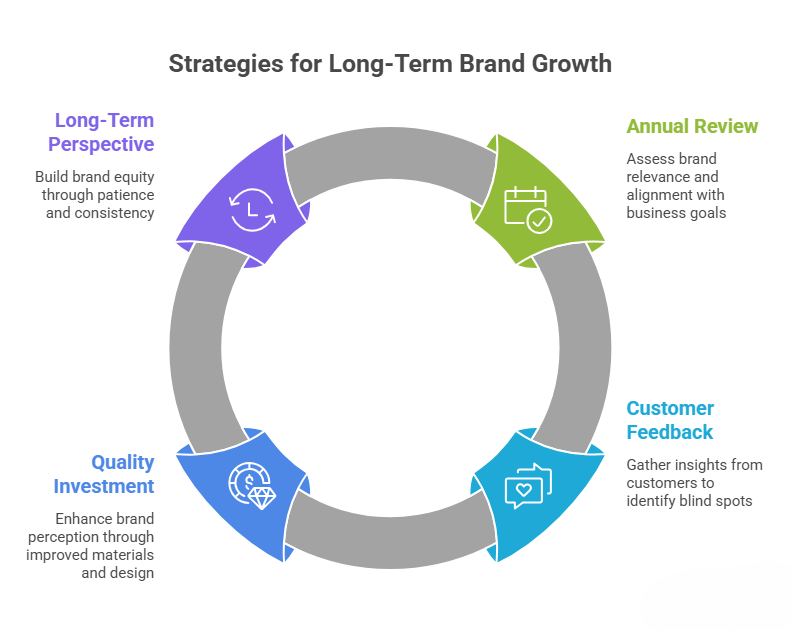 Getting the foundations right is only part of the job. Here’s how to keep your brand growing stronger over time.
Review it every year.
Markets move, and expectations shift. Take time once a year to ask honestly whether your brand still reflects where your business is heading.
Listen to your customers.
Ask them directly what they think of your brand. The answers might surprise you, and they’ll reveal blind spots no internal review ever could.
Invest in quality as you grow.
A refreshed logo, better-designed print materials, and a more polished website: these things signal to customers that you take your business seriously.
Play the long game.
Brand equity, the recognition and trust your brand builds over time, doesn’t arrive quickly. Stay patient and consistent, and it compounds steadily.
Common Branding Mistakes Small Businesses Should Avoid
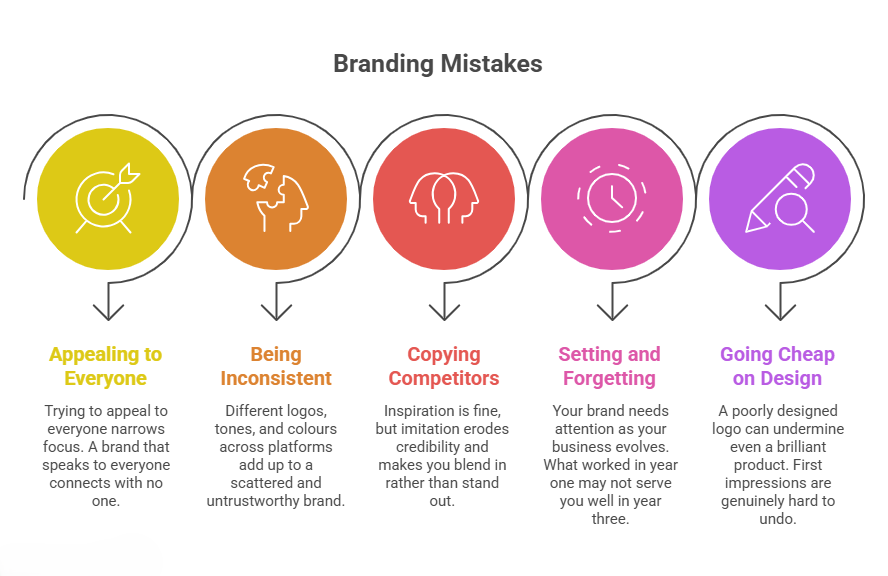 Even genuinely good businesses fall into these traps. Watch out for them.
- Trying to appeal to everyone. Narrow your focus. A brand that speaks to everyone connects with no one.
- Being inconsistent. Different logos, different tones, different colours across platforms: it all adds up to a brand that feels scattered and untrustworthy.
- Copying competitors. Inspiration is fine. Imitation erodes your credibility and makes you blend in rather than stand out.
- Setting it and forgetting it. Your brand needs attention as your business evolves. What worked in year one may not serve you well in year three.
- Going cheap on design. A poorly designed logo can undermine even a brilliant product. First impressions are genuinely hard to undo.
Conclusion: How a Strong Brand Drives Business Success
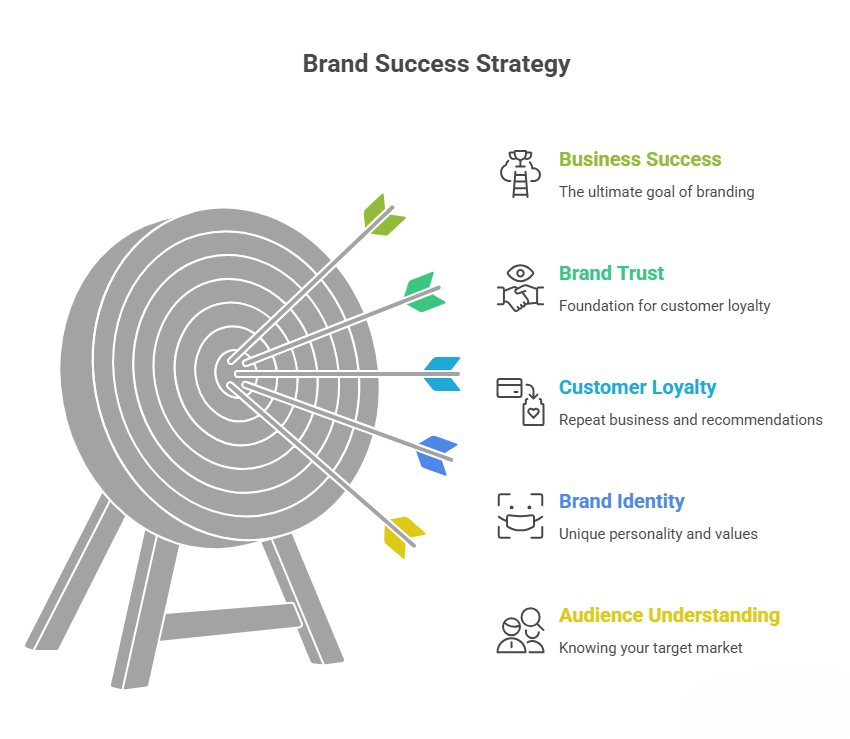 Building a brand takes real effort, and there’s no shortcut worth taking. But the payoff is real, too.
Research shows 87% of shoppers are willing to pay more for brands they trust. That’s not a small thing. That’s a direct case for investing in your brand rather than endlessly competing on price.
A strong brand gives your business an identity people connect with. It builds the kind of trust that turns browsers into buyers and buyers into loyal customers who recommend you without being asked.
Every great brand you admire started exactly where you are now, with an idea and a desire to be known for something.
Start with your audience. Build something consistent. Tell your story honestly.
And if you’d like expert support getting there, the team at dsgnuk would love to help. Have a look at our branding and logo design services, and let’s build something worth remembering.
Frequently Asked Questions
How long does it take to build a brand?
A basic brand identity, logo, colours, and core messaging can come together in a few weeks. But genuine brand recognition, the kind where customers actively choose you over alternatives, takes months and years of showing up consistently.
Do small businesses really need a brand?
Yes, without question. A clear brand helps small businesses earn trust, attract the right customers, and compete without constantly cutting prices. It’s one of the smartest long-term investments a business can make.
What’s the difference between a brand and a logo?
Your logo is a symbol. Your brand is the full experience, your values, your voice, your personality, and the feeling people get every time they come into contact with your business.
How much does it cost to build a brand?
It varies depending on what you need and who you work with. Starting with the essentials, a strong logo and clear messaging, is very achievable. A professional agency reduces costly mistakes and delivers a more polished result from the start.
Can I build a brand on a small budget?
Absolutely. Start with the basics: a professional logo, a clear voice, a consistent colour palette. Then build from there as revenue grows. Consistency matters far more than budget size, and that part costs nothing but discipline.
